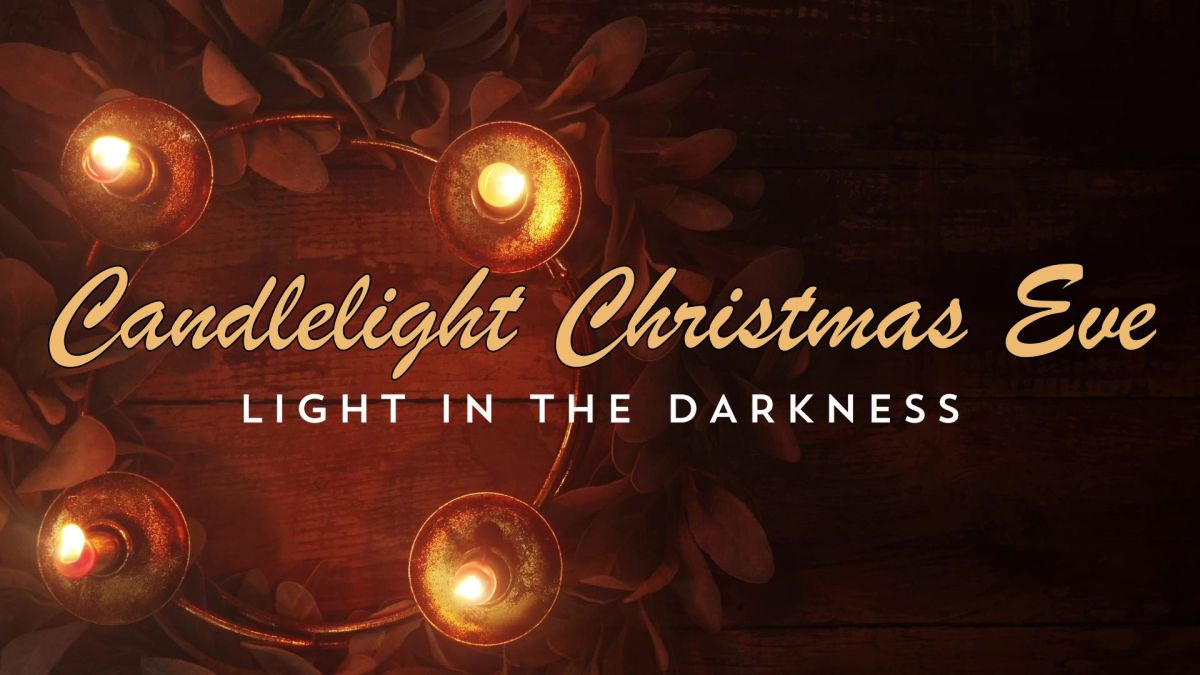
Many of us experience a strange phenomenon this time of year. We spend December rushing toward Christmas—shopping, decorating, baking, attending parties, coordinating schedules. The to-do lists multiply. The calendar fills. We move faster and faster, trying to get everything done before the big day arrives. Then suddenly, it’s Christmas Eve. We sit down in church, and everything slows. The lights dim. The candles flicker. The familiar carols wash over us. After all that frantic preparation, we finally stop long enough to remember what we’ve been preparing for.
I wonder if Mary and Joseph felt something similar. They spent weeks traveling from Nazareth to Bethlehem because Caesar demanded it. The journey was hard. The timing was terrible. Everything felt rushed and chaotic. Then suddenly, in a stable meant for animals, everything slowed. Mary gave birth. She wrapped her baby. She laid him in a manger. After all that frantic movement, the waiting ended. The Light arrived.
Tonight, we celebrate that same arrival. Whether you’re here every Sunday, this is your first time in church in years, or your first time ever—you belong here tonight. The Light that came for shepherds in that field comes for you, exactly as you are, carrying whatever you’re carrying.
It’s been an intense year, hasn’t it? Wildfires and wars. Division and uncertainty. Headlines that made us anxious and arguments that strained relationships. Many of us arrive tonight exhausted—not just from December’s rush, but from twelve months of holding our breath, wondering what comes next. Tonight offers something different. Not escape from reality, but an invitation to see reality more clearly. In the stillness of this night, we remember that God has always done the most important work in the midst of chaos, not in spite of it.
Luke’s account of Jesus’ birth is a masterpiece of contrast. The story opens with Caesar Augustus, the most powerful man in the world, issuing a decree that moves entire populations. But Luke quickly shifts our attention from palaces to a stable, from empire-wide significance to two displaced people searching for shelter. This contrast isn’t accidental—it’s central to Luke’s message about how God works.
Notice who receives the birth announcement. Not priests in the temple. Not Roman officials. Not religious leaders in Jerusalem. Shepherds—people at the bottom of the social ladder, working the night shift, ceremonially unclean according to religious law. Yet heaven breaks open for them. The glory of the Lord shines around people society has pushed to the margins.
The angel’s message directly challenges Roman imperial claims. Caesar called himself “savior” and “lord,” proclaiming he brought “peace” through military conquest. But the angel announces the true Savior, Christ the Lord, whose peace comes not through violence but through vulnerable love. This baby in a manger will overturn everything the empire stands for.
The shepherds’ response teaches us something crucial about faith. They don’t understand everything. They don’t have all their questions answered. But they go. They see. They tell others. They return home glorifying and praising God. Faith doesn’t require perfect understanding—it requires responding to the light you’ve been given.
Mary, meanwhile, treasures these things and ponders them in her heart. She holds the tension between the mundane reality of a newborn baby and the cosmic significance the angels proclaimed. Both are true. The Light of the World arrives as a vulnerable infant who needs his mother’s care.
This is what Christians call the incarnation—God becoming flesh, becoming one of us. It’s not just that God sent a message or showed up for a visit. God actually entered into human life, experiencing everything we experience: birth, hunger, joy, sorrow, friendship, suffering. God doesn’t fix our darkness from a distance. God enters it with us. That’s what makes Christmas so powerful.
This baby grew up to become a teacher who gathered friends around him and showed them a new way to live. He healed the sick, welcomed the outcast, and challenged the powerful. He demonstrated what it looks like when God’s love takes human form. His message was so threatening to those in power that they put him to death. But even death couldn’t hold him. Three days later, he rose—and his followers have been sharing that light ever since. That’s the story that begins tonight in a stable.
This Christmas Eve, many of us carry darkness we may not want to say out loud. Maybe you’re grieving someone who should be at the table tomorrow. Maybe you’re terrified about a diagnosis or a relationship falling apart. Maybe you’re financially stressed, wondering how you’ll make it through the next few months. Maybe you’re just exhausted from pretending everything’s fine when it’s not.
Maybe you’re here because someone invited you and you’re not sure what you believe anymore. Maybe your family dragged you here and you’d rather be anywhere else. Maybe you came because Christmas Eve just felt like the right place to be. Maybe you’ve been coming to this service for as long as you can remember and wouldn’t miss it for anything. Maybe you’re not even sure why you’re here.
It doesn’t matter. The Light comes for you. Whatever brought you through these doors tonight, whatever you’re carrying, whatever doubts or fears or hopes you hold—the Light comes for you. Not to shame your darkness but to enter it with you. You don’t have to have it all together for God to show up. You don’t have to earn it. You don’t have to understand it. You don’t have to prove you’re worthy of it. God specializes in showing up exactly when we feel most overwhelmed.
The good news is that God doesn’t wait for us to create perfect conditions before showing up. That first Christmas, nothing was right. The world was occupied by empire. The holy family couldn’t find shelter. The religious establishment was disconnected from God’s work. The witnesses were ritually unclean night-shift workers. None of it was how anyone expected God to arrive.
But that’s exactly when the Light came—right into the mess, the displacement, the darkness.
The same is true tonight. God isn’t waiting for you to get your life sorted out, your doubts resolved, your questions answered. The Light that came to shepherds comes to you right now, right where you are, in whatever darkness you’re carrying. God’s light breaks through not because we deserve it but because that’s who God is—the One who enters our darkness with relentless, vulnerable love.
The shepherds came and saw. They couldn’t keep quiet about what they experienced. If tonight stirs something in you, come back. Starting January 5, we begin a series called “Come and See”—the same invitation Jesus gave his first disciples. You don’t need your questions answered first. The shepherds didn’t. They just went, saw, and everything changed.
In a few moments, we’ll light candles together. A single flame will spread from person to person until this room glows with shared light. It’s a picture of what we’ve been talking about—the light of Christ that doesn’t stay contained but spreads, that invites others in, that pushes back darkness not through force but through presence.
As you receive that light tonight, receive also the truth it represents: Jesus, the Light of the World, has come. He has come for you. And through you, his light keeps spreading.
Will you pray with me?
God of light and love, you entered our darkness as a vulnerable baby born in a stable. We receive your light tonight. Give us courage to keep showing up, to come and see what you’re doing, and to carry this light into every dark place we encounter. Through Christ we pray. Amen.
In crafting today’s sermon, I employed AI assistants like Claude and Apple Intelligence, yet the ultimate responsibility for its content rests with me. These tools offered valuable perspectives, but the most influential sermon preparation hinges on biblical study, theological insight, personal reflection, and divine guidance. I see AI as a supportive aid to enrich the sermon process while ensuring my own voice in proclaiming the Word of God.

 Rev. Andrew Conard