

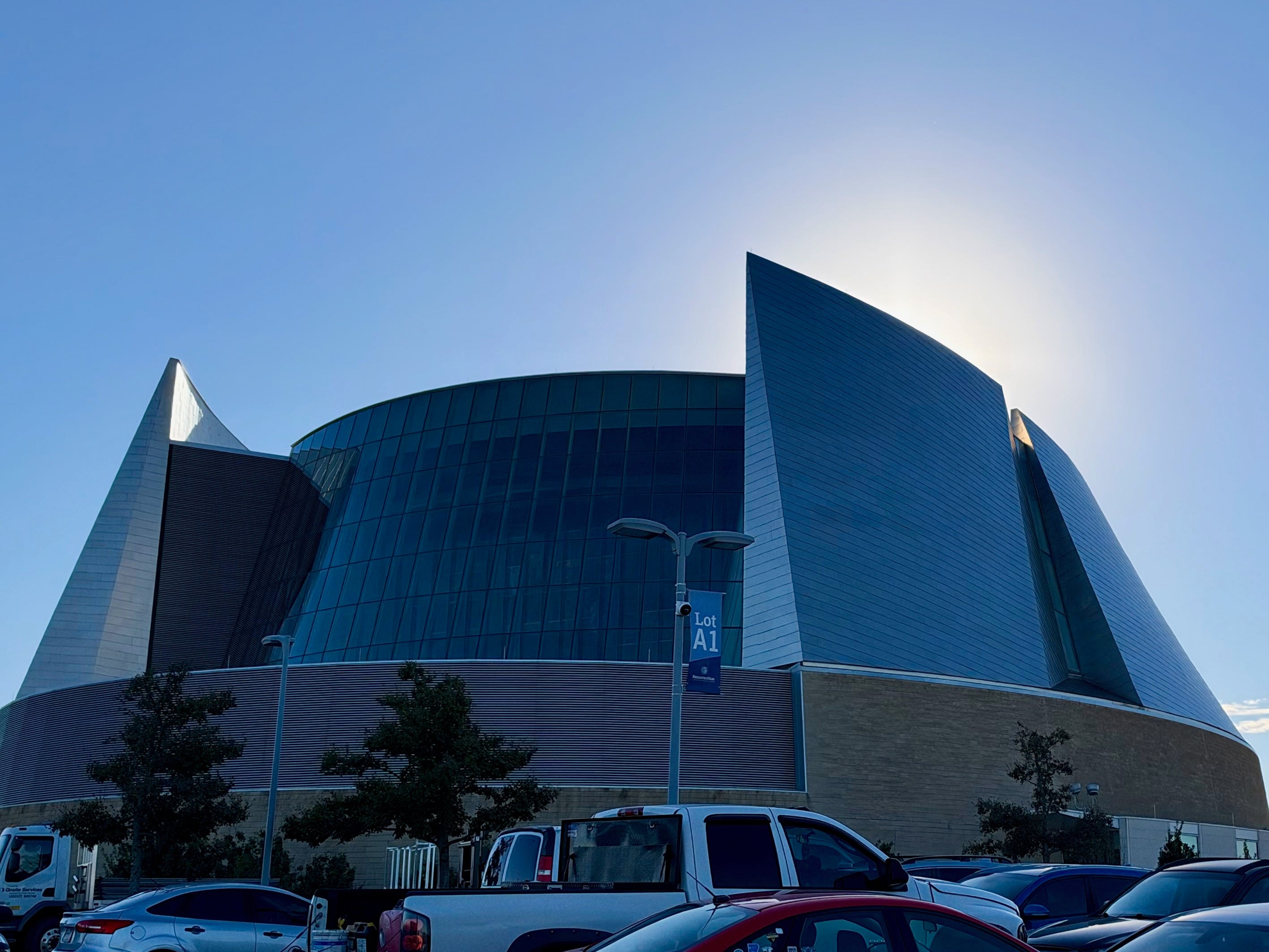
Notes from Resurrection is a short mini-series from Leadership Institute 2026 at Resurrection, A United Methodist Church, in Leawood, Kansas. A post went up for each day. These are observation, not transcript.
The Last Morning
We had two sessions left on Friday morning: a morning keynote from Magrey deVega on who a leader is, and Adam Hamilton’s closing message. Then Nicole and I started the drive home to McPherson, with plenty to talk about.
Magrey deVega: Who a Leader Is
Magrey deVega is the senior pastor of Hyde Park United Methodist Church in Tampa. He began with a distinction. Much of what we learn about leadership is about what a leader does. This session was about who a leader is. “Leadership is not just a mode of doing,” deVega said. “It is also a way of being.” He drew on voices from across the church’s long history, including Thomas Merton, Irenaeus, and the twelfth-century monk Guerric of Igny, along with the leadership researcher Herminia Ibarra. Together they pointed to a life that holds action and contemplation together. Who you are today is, in large part, the culmination of your past. Growth is possible, but it usually comes through adversity. Our first instinct in a hard season is to run. Yet the hard seasons may be where we become who God made us to be.
Adam Hamilton: Get Out of the Boat
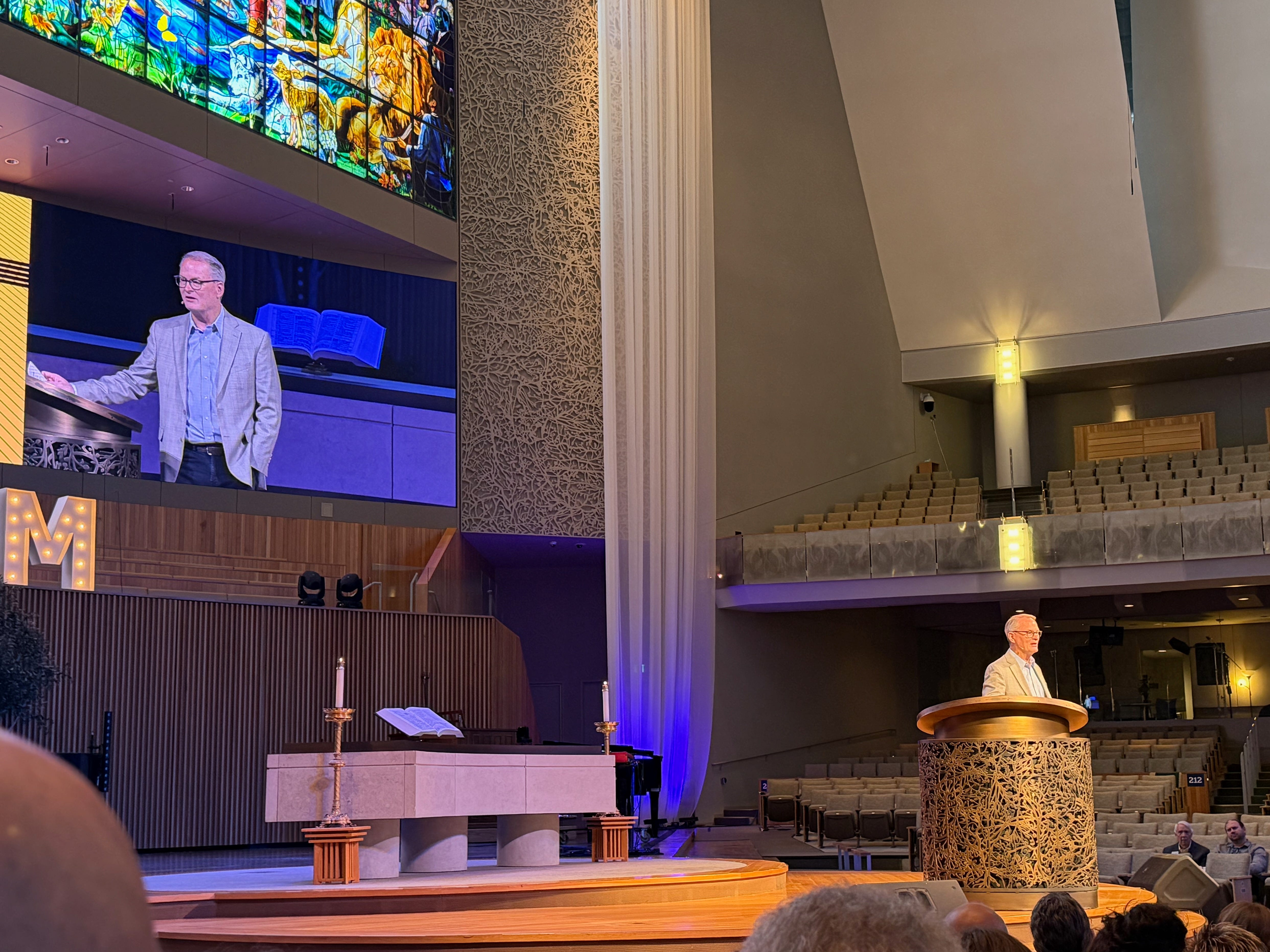
Adam Hamilton stayed with hard seasons in his closing message. He turned to Matthew 14, when the disciples are caught in a storm and Jesus comes to them walking on the water. Storms are a part of life, and they come for everyone, including our children and congregants. In the storm, Jesus says, “Be encouraged! It’s me. Don’t be afraid” (Matthew 14:27). We know that Christ is in the boat with us. Then we do what 1 Peter tells us: “Throw all your anxiety onto him, because he cares about you” (1 Peter 5:7). We can also be Christ’s presence for someone else in their storm, but only if we pay attention. Sometimes that looks as simple as staying in touch with someone who is nearing the end of life.
But we can’t stay in the boat. In the middle of the storm, Peter says, “Lord, if it’s you, order me to come to you on the water.” Jesus answers, “Come,” and Peter “got out of the boat and was walking on the water toward Jesus” (Matthew 14:28-29). Hamilton reminded us that the great people of faith heard a call like that, from Abram, who was simply told to go, to Moses at the burning bush, sent back to Egypt. He described discernment in two steps. First comes a sense within yourself, a feeling you can’t shake. Then you listen to others, who may confirm it or name it for you. He walked us through his own discernment about running for office. He went first to his senior leadership team, then to the bishop and the staff-parish committee, and then out on a listening tour, where one person asked him simply, “Do you trust Jesus?” Not all of us are meant to run for office, he said, but all of us are meant to get out of the boat.
When you step out, people will criticize you, just as they criticized every leader in scripture. Listen to constructive criticism, but when people are just being mean, don’t let it destroy you. Keep going.
A Brain, a Heart, and Courage
Borrowing from Ronald Heifetz, Hamilton described leadership as closing the gap between the world as it is and the world as it should be. Some people in our communities are already doing that work. If they can close the gap, shouldn’t the church?
Hamilton also visited the Wizard of Oz museum in Liberal. He turned the Scarecrow, the Tin Man, and the Lion into a picture of discipleship. We can form Christians who think deeply about the Bible and theology and bring their questions to their faith. We can keep our hearts soft and full of compassion. For pastors, that comes from sitting with people in the hospital and at the end of life, even when someone else on staff has that job. And we can find our courage, choosing to influence people rather than irritate them, and speaking up when people are being hurt.
He ended with hope. Easter means the worst thing is never the last thing. Somewhere over the rainbow, God has prepared a city for us (Hebrews 11:16), and Jesus goes to prepare a place for us (John 14:2-3).
Remembering Who We Are
United Methodist pastors move from appointment to appointment, so it is rare to get to go back to a church we once served. For Nicole and me, coming back to Resurrection is meaningful in a different way than simply picking up new ministry ideas. We were part of this big, incredible place, and it shaped who we are. This week we saw Dr. Lovett Weems, one of our professors at Wesley Theological Seminary, who first connected us with Adam Hamilton. We also made time to drive by our first apartment, where we started our married life together, and the hospital where both of our children were born. Longtime staff and volunteers still remembered us. One person found Nicole to tell her how much it meant that she led their vow renewal, and another remembered that I baptized their child, who is now a senior in high school. Going back helps us remember who we are and the people who shaped our leadership journey, and we gladly bring that home with us to our places of ministry now.
Bringing It Home to McPherson First
I came home from the last morning with learning and next steps for McPherson First, from who we are to where God may be calling us next.
deVega: Leadership starts with who we are, not only what we do. What helps you hold action and contemplation together? What hard season has shaped you the most?
Out of the boat: Christ is in the boat with us, and Christ also calls us out of it. Who in our church family is in a storm right now, and how could we be Christ’s presence for them? Where might God be calling McPherson First to step out?
Closing the gap: Leadership closes the gap between the world as it is and the world as it should be. What gap between McPherson as it is and as it should be could we help close? Who could we partner with to do it?
Brain, heart, and courage: Disciples need all three. Where are we helping people think deeply about their faith? Where do we need more courage to speak up for people who are being hurt?
Remembering who we are: Places and people can remind us who we are in Christ. What place or person shaped your faith? Who could you thank this week?
These questions are for all of us. They work wherever you live and whatever church you call home. Pick one and talk it over with someone this week. Thank you for reading along with Notes from Resurrection. It was good to share these three days with you.